About the McGarvie Smith Institute
Brief history
The McGarvie Smith Institute was established in 1918 as a result of a gift to the State of NSW by John McGarvie Smith, who had developed a vaccine for Anthrax. The Institute was incorporated by the McGarvie Smith Incorporation Act 1928.
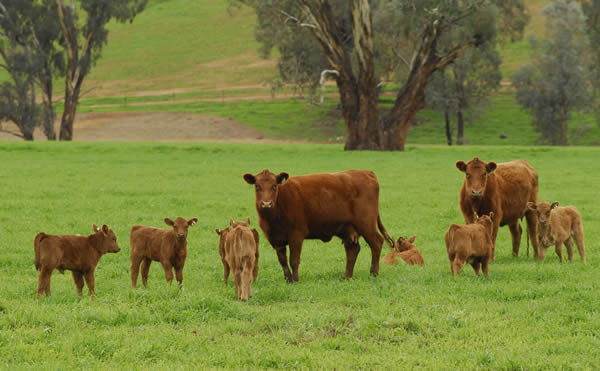
The Institute focuses on making grants to fund research in the production livestock industries. The Institute has a limited capital base and seeks appropriate niche research projects.
Objectives
The prime objective of the Institute is expressed in Clause 5(b) of the McGarvie Smith Incorporation Act 1928:
To promote and advance either alone or in conjunction with any person or body corporate, or with the Department of Agriculture of NSW, veterinary science and the sciences of pathology, microbiology, parasitology, or any allied science so far as they relate to veterinary science, and to engage in the promotion of scientific research and the equipment of laboratories in NSW or elsewhere in such manner and at such cost as the trustees may from time to time determine.
In accordance with Clause 5(c) of the McGarvie Smith Incorporation Act 1928: The Institute may take or accept any gift, subsidy or endowment, whether subject to any special trust or not, for all or any of the objects of the body corporate and to carry out any special trust to which such gift subsidy, or endowment may be subject according to the terms thereof.
Board members
Bruce Christie BVSc, MANZCVS, GAICD

Bruce Christie graduated as a veterinarian in 1979. He has worked as a veterinarian and a biosecurity specialist in Australia, the United Kingdom, Indonesia, and Timor Leste.
Bruce started his career working in private veterinary practice in Queensland before moving to NSW in 1982 to take up a role with the Moss Vale Pastures Protection Board. He joined the NSW Government in 1987 as a cattle specialist, then filled several roles including Institute Supervisor at the Elisabeth Macarthur Agricultural Institute and NSW’s chief veterinary officer. He was appointed as the first head of Biosecurity NSW and in 2014, was appointed Deputy Director General Biosecurity and Food Safety within the NSW Department of Primary Industries.
Bruce is presently a Trustee and Chair of the McGarvie Smith Institute, Chair of the Centre for Invasives Species Solutions, a member of the World Relief, Conserve Our World – Indonesia, Project Management Group, an advisory member with the Board of the Centre of Excellence for Biosecurity Risk Analysis and President of the Illawarra Rhododendron and Rainforest Gardens.
The McGarvie Smith Institute has a long history of supporting animal health and livestock production research in NSW and as a Trustee and the Chair of the Board of Trustees, I am committed to continue and expand on this legacy.
Jo Coombe BSc, BVSc, PhD

Jo is the NSW Chief Veterinary Officer and leads NSW Department of Primary Industries (DPI) Animal Biosecurity unit in the prevention and control of exotic and endemic animal pests and diseases. She represents NSW on the Animal Health Committee, leading the development of animal health policy and operations at a state and national level.
Originally a dairy vet, Jo has worked in academia and industry and is passionate about animal health, welfare, biosecurity and antimicrobial stewardship. Jo is an invited member of ASTAG, the Australian Strategic and Technical Advisory Group on antimicrobial resistance and is a Trustee for the McGarvie Smith Institute.
I am honoured to be in a position, through my role with the McGarvie Smith Institute to support novel and innovative veterinary and allied research projects for the advancement of animal health and production in NSW.
Jim Rothwell, BVSc, PhD, MANZCVSc, GAICD
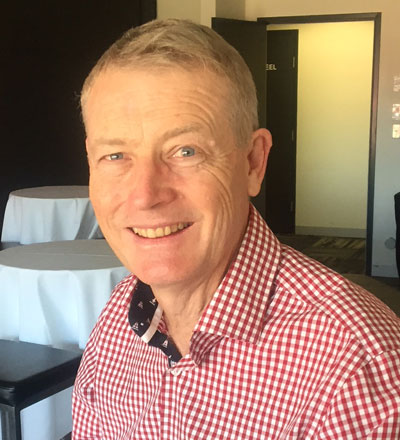
Jim began his career in veterinary practice, followed by 10 years as a veterinary pathologist and the following 10 years working for Elanco Animal Health in parasiticide development and research into the external parasites of livestock. Jim spent time in consulting before becoming a Professor of Veterinary Pathology and Infectious Disease at the University of Queensland.
In 2011 he moved to be Health and Welfare Program Manager at Meat & Livestock Australia just in time for the live export scandal. He is bookending his career back with NSW DPI as Director of Elizabeth Macarthur Agricultural Institute (EMAI) – the NSW Department of Primary Industries (DPI) Centre of Excellence for Plant and Animal Health. He has patents, registered products, scientific papers and conference proceedings to his name.
I’m on the board as a NSW government representative and to comment and advise on research proposals. The role is important to me because we support pilot projects, interesting ideas and provide seed funding all of which support innovation. The support allows researchers space to conduct proof of concept projects. If successful, this sets them up for larger grants all of which benefit the livestock industries of NSW.
Sam Walker
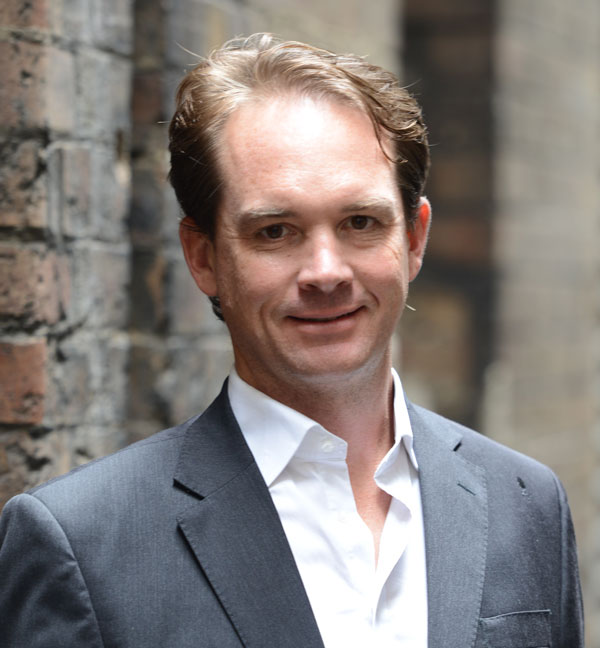
Sam graduated from the University of Sydney as a veterinarian in 2001. He worked in mixed animal practice on the NSW south coast and as a small animal veterinarian in Sydney before completing a Masters Of Commerce and changing career paths to financial services.
During the second part of his career, Sam has worked in investment banking at Merrill Lynch (now Bank of America) and in private equity for Goldman Sachs, The Carlyle Group and Macquarie Bank before founding his own private equity firm, Arcadia Capital, in 2019. Sam is currently a director of Orange Hire and Chairman of Ansett Aviation Training, two portfolio companies of Arcadia Capital. He has also been a Councillor of the Royal Agricultural Society of NSW since 2010 and a member of the RAS Board since 2018.
It is a privilege to be a trustee of an organisation that has been assisting in the betterment of agriculture in NSW for close to 100 years. Through careful financial management and the identification of high-impact projects to support, I am proud to be part of an Institute that can continue to make a difference for the next 100 years and beyond.
James (Jim) Young
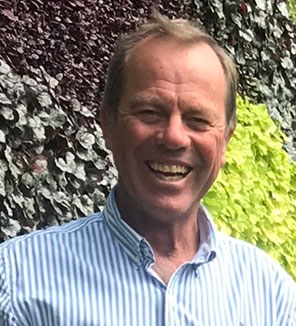
Jim lives in Walcha NSW where he is Partner and Director of Glen Collin Pastoral Co.
Glen Collin Pastoral Co is a family owned and run prime lamb and Angus beef grazing operation situated south of Walcha on the Northern Tablelands. Educated at the Kings School, Jim went onto study Farm Management at Lincoln University in Christchurch, New Zealand.
My involvement with the McGarvie Smith Institute is a means for me to contribute to the agricultural industry in a practical way. Hopefully my involvement in a large-scale animal husbandry grazing business can be beneficial to the decision making of the board.
Hollie Brown

Hollie lives with her husband Ollie, in the Southern Highlands of NSW on the small property where she grew up. Always surrounded by a menagerie of animals, this is where her love for agriculture and the livestock industry first started.
Hollie completed her Bachelor of Agriculture at Charles Sturt University in Wagga Wagga before starting a career in the industry. Hollie has held several roles in the industry working across animal health, policy, agri-politics, media and retail. Most notably, Hollie was the Policy Director to the then Minister for Primary Industries, Niall Blair before moving across to Woolworths Group focusing on agricultural policy in Government Relations. Hollie is now Resilience Lead for Woolworths Supermarkets.
I'm incredibly grateful to be able to help guide funds to research projects often at the start of their journey. Our livestock industry is as strong and resilient as it is because of our researchers and their tireless efforts to look at something differently, trial a novel approach and commit to seeing it through. It is a privilege to be on the board of the McGarvie Smith Institute.
Robyn Munro
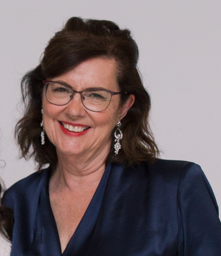
Robyn grew up on a rural property in regional NSW. She completed initial tertiary studies in agricultural science at the University of Sydney, followed by several years as a research officer in the Federal Department of Primary Industries. Robyn returned to Sydney from Canberra to complete her PhD in Agricultural Economics with funding from the wool industry, and then went on to work in managerial roles at the Australian Wool Corporation, and in particular in its R & D Department.
Robyn’s career changed focus in the late 1980’s when she spent 15 years with the Commonwealth Bank in its head office, where she held senior executive roles across marketing, human resources, product development, and its financial services arm, and was actively involved in the Bank’s privatisation in the 1990’s. Robyn has since worked with Universities in NSW both as an Academic researcher and as a Senior R & D administrator, as well as serving on various Boards associated with tertiary education, rural health and mental health.
‘The Institute’s focus on directing research funding to innovative projects with impact potential, together with its support of young enthusiastic scientists, has been central to its goal of improving the performance of NSW livestock industries. As a Trustee I am privileged to be part of this valuable research funding.